Why Is My Handmade Paper Taking So Long to Dry?
Quick answer
Change the damp layers and dry the air. If drying takes more than a day, change the felts or blotters once a day, as Make: advises, or the sheets may mould instead of drying. Helen Hiebert notes that humid air slows drying unless you control the room with an air conditioner or dehumidifier.
Is this your problem?
Symptom: Sheet stays damp long after pressing
A sheet leaves the papermaking mould holding far more water than it can keep. You pressed the post a while ago, and the sheets are still cool and damp to the touch. A day has gone by and the stack has barely changed.
Slow drying matters for more than patience. Damp paper grows mould if it sits too long. Peeling sheets early has its own cost: Hiebert notes that removing damp papers from interfacing before they dry usually makes them cockle even more.
There is no standard drying time. Published estimates run from under an hour to several days, depending on humidity, thickness, and the pulp. What matters is whether the sheets are drying at all.
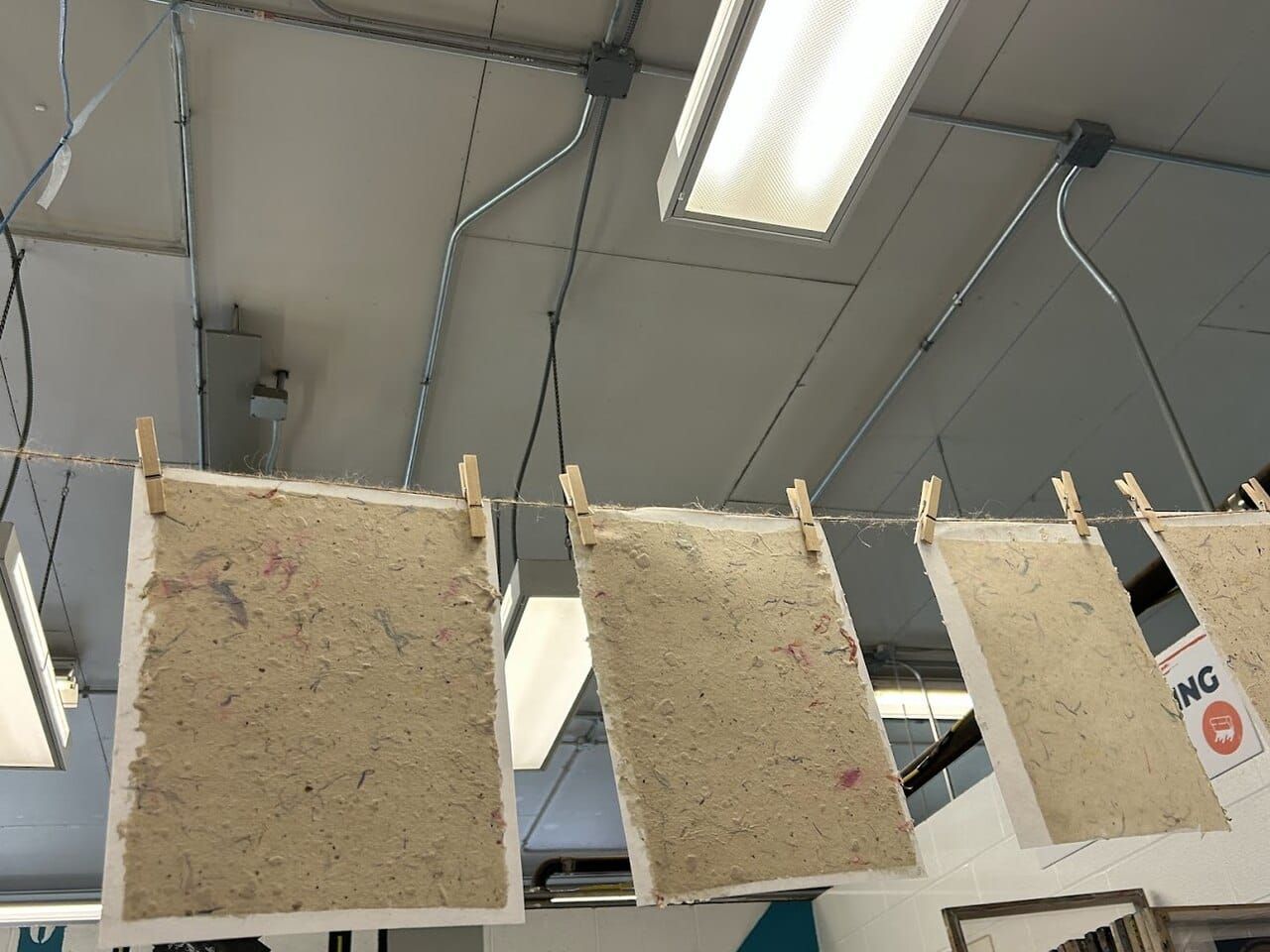

Similar symptoms
Ranked causes
| Cause | Tell-tale sign | Quick check | Fix |
|---|---|---|---|
| Too much water left in the sheet | The sheet is still heavy and wet after pressing | Press the next post more thoroughly and compare drying times | Press the post well before it goes to dry |
| Damp, still air | Slow drying in every position, worse on humid days | Move a sheet to a drier, breezier room and compare | Add a fan, a dehumidifier, or an air conditioner |
| Interleaving is saturated | A stack that does not change from day to day, with damp layers | Lift a sheet of interleaving. Is it wet? | Change damp layers every day, or use a fan and corrugated board |
| Sheet is heavy or thick | Thin sheets from the same post dry much sooner | Pull one thinner sheet and dry it next to the thick one | Allow more time, or thin the vat for the next batch |
Diagnose in order
Change one thing per batch, and keep a note of the room conditions.
- Feel the sheets after pressing. If water still runs from the post or the sheets feel soaking wet, start at the press.
- Lift the interleaving. Damp blotters, towels, or felts cannot take up more water.
- Check the room. Is it a humid day? Is the air moving? Marilyn Sward's advice is simple: drying depends on moisture leaving the sheet for the air, so low humidity works best.
- Change the position. Move a sheet to a drier part of the house or near a fan.
- Compare thickness. Pull one thinner sheet and dry it alongside the thick one.
- Look at the drying method. Hiebert's exchange-drying stack can take a day to a week, while Mary Tasillo notes that a fan-based system with corrugated boards speeds up drying.
Fixes, step by step
Press out more water
Water you press out does not have to evaporate. Use a press, or stand on a board over the post as Paperslurry describes.
There are limits. Hiebert warns that pressing spurs too hard can make the sheets hard to separate when dry, and a sheet meant for board drying should not be quite fully pressed, or it won't stick to the board.
Change the damp layers
Interleaving works only while it can take up more water. Replace damp blotters, towels, or felts daily. Helen Hiebert notes that the sheets may mould if the old layers stay in place.
Move the air
Marilyn Sward describes drying as moisture leaving the sheet for the surrounding air. If you can control the air circulation, Hiebert directs it at the broad faces of the sheets, not the edges, for the least cockling.
Lower the humidity
Hiebert notes that the more humid it is, the longer drying takes, unless you control the room with an air conditioner or dehumidifier. Sward says the same: the exchange of moisture to the air works best in low humidity.
Use a fan and corrugated board for volume
Stack sheets between blotters and corrugated board, with a board and weight on top, and run a fan along the corrugation channels. Ted Snider turns the fan on and leaves it to blow overnight. Hiebert's version yields flat, dry paper in about 24 hours, and Tasillo notes that fan-based drying lessens the labor and speeds up drying.
Skip the iron
Heat looks like a fast answer, but Make: notes that ironing tends to cause more cockling. If a room is damp, the Northeast Document Conservation Center warns against turning up the heat: when the humidity is high and cannot be controlled, additional heat makes mould grow faster.
Prevent it next batch
- Press every post the same way, and record it.
- Have enough dry interleaving on hand to change it every day.
- Do not stack more sheets than you can keep changing.
- Check the weather before you plan a large batch.
- Note the humidity and the drying time on your batch log.
When it's not fixable
A slow-drying sheet is not ruined if it ends up clean and flat. It only becomes a loss when it spots or smells musty. If a stack has been damp for several days, check it closely for spots.
Very heavy sheets simply need more time. Plan for that when you make them, and give them more air.
If a sheet has started to grow mould, keep it away from the vat and your clean sheets. See the mould spots guide.
FAQ
How long should a pressed sheet take to dry?
There is no fixed figure. Make: says anywhere from under an hour to several days, depending on humidity and pulp. Helen Hiebert gives a day to a week for a stack, depending on the humidity, the fibre, and the thickness. Ted Snider notes that heavy-weight sheets may take four or five days to air dry.
Does a thicker sheet always take longer?
Thickness is one factor among several. Hiebert lists humidity, the fibre, and the paper's thickness together, and Snider notes that heavy-weight sheets may take four or five days to air dry. Compare sheets of different thickness in the same place before you decide thickness is to blame.
Why does the middle stay damp after the edges dry?
Hiebert notes that the edges dry fastest, so the middle is the last to give up its water. If you can control the air, she directs it at the broad faces of the sheets rather than the edges, which also gives the least cockling.
Can slow drying lead to musty spots?
Yes. The Northeast Document Conservation Center says mould normally grows on wet materials in about 48 hours, sometimes sooner. If a stack is still damp after a day or two, change the layers and add air. Make: gives the same advice about changing felts daily.
Related problems
Next stage: Why Is My Handmade Paper Too Rough or Fuzzy to Write On?
Sources and further reading
- Drying Paper, by Helen Hiebert (Hand Papermaking Newsletter #75)
- Drying Techniques (Helen Hiebert Studio)
- Wet Sheet Handling / Drying, by Ted Snider (Hand Papermaking Newsletter #56)
- Couching and Drying Surfaces, by Mary Tasillo (Hand Papermaking Newsletter #95)
- Drying on Fiberglass Screening, by Marilyn Sward (Hand Papermaking Newsletter #62)
- Paper Making 101, by Francois Vigneault (Make:)
- Here's How to Make Handmade Paper from Recycled Materials, by May Babcock (Paperslurry)
- Emergency Salvage of Moldy Books and Paper, Preservation Leaflet 3.8 (Northeast Document Conservation Center)