Why Is My Handmade Paper Too Rough or Fuzzy to Write On?
Quick answer
Couch the next sheet onto smooth interfacing instead of wool felt, then dry it against a smooth board or glass. Ted Snider explains that a wet sheet takes on the weave of the felts, and if it then air dries, that weave stays as a rough finish. Fix the surface before you think about sizing.
Is this your problem?
Symptom: Surface is too rough or fuzzy to write on
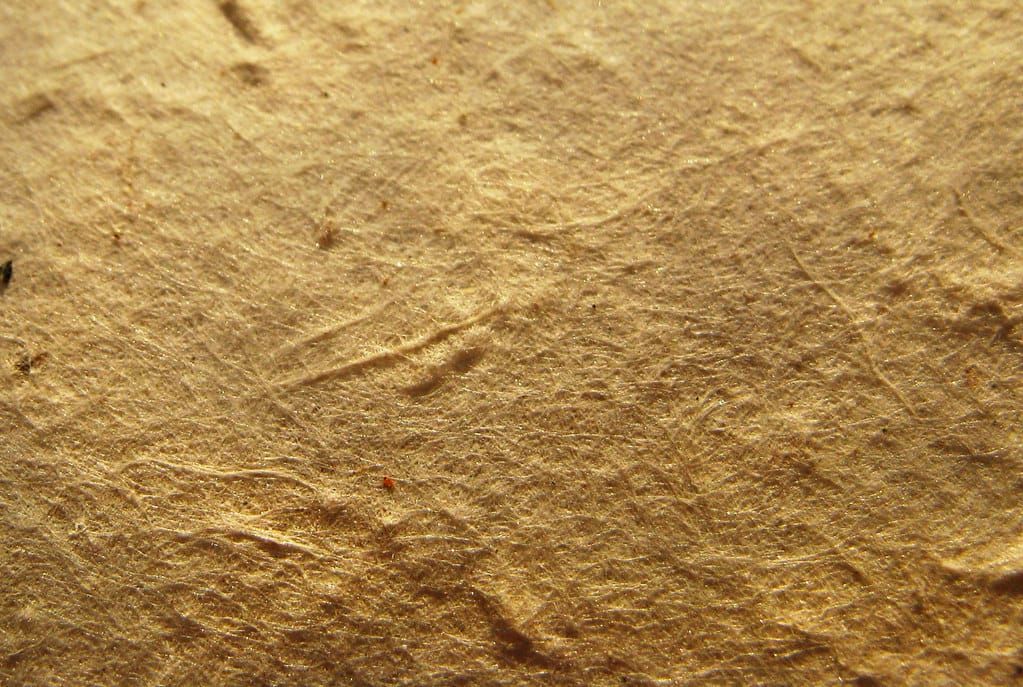
The nib catches, skips, or picks up fibres. The surface feels like a blotter, or it has a clear texture of felt weave. Texture is not always a fault. Snider notes that a watercolourist may want a Rough surface, while calligraphers who use sharp pens avoid Rough paper because it catches the pen and spoils the lettering.
Separate two faults. Roughness is about the surface: the pen drags or skips. Ink bleed is about absorbency: the line feathers and spreads. A sheet can have both, and each needs a different fix.
A wet sheet is soft and takes on whatever it is pressed against. Ted Snider describes the rough finish as what you get when a sheet takes on the weave of the felts and then dries in air. So the surface is mostly decided at the couching and drying stages, long before the pen comes out.
Similar symptoms
Ranked causes
| Cause | Tell-tale sign | Quick check | Fix |
|---|---|---|---|
| Felt texture pressed into the sheet | A visible weave across the surface, on a sheet couched on wool felt | Couch one sheet onto interfacing and one onto felt, then compare | Use smoother interfacing, or stack and press sheets between smooth boards |
| Air-dried with nothing smooth against it | A soft, open surface from drying on a line or rack | Dry one sheet against a smooth board and compare | Dry against a smooth surface or under weight |
| Loose fibres or lint on the surface | Fuzz that lifts with a fingertip, or hairs from the felt on the sheet | Rub a corner gently and look for lifting fibres or felt hairs | Brush and rinse felts, and use a better-beaten pulp |
| Coarse or underbeaten pulp, or inclusions | Grit, flecks, or a coarse, open texture that a smooth surface does not cure | Compare with a longer-beaten or plain pulp | Beat or blend the pulp longer, and leave out hard inclusions |
Diagnose in order
Change one thing per sheet. Write the same line with the same pen on each test.
- Look at the surface at a low angle. A regular weave means the felt. Random fuzz means loose fibres.
- Test the other face. One side is often smoother.
- Change the couching surface. Couch alternate sheets onto interfacing and onto felt.
- Change the drying surface. Dry one sheet against a smooth board or glass and one in the air.
- Check the felts. Look for lint on the wet sheet.
- Check the pulp. Compare your usual pulp against one beaten or blended longer.
Fixes, step by step
Couch onto a smoother surface
Paper couched on heavy non-fusible interfacing is smoother than paper couched on wool felt. Mary Tasillo notes that the more pressure you apply, the more the sheet picks up the characteristics of the couching material, so a smooth material pays off under pressure.
Dry against something smooth
Tasillo notes that restraint drying gives less texture than air drying. Drying on glass gives the smoothest surface, with a sheen on one side, and wooden boards give a more natural surface. She adds that boards work best untreated, because paper tends to stick to boards coated with polyurethane.
Press gently between smooth boards
For a medium finish, Snider stacks sheets as they come off the felts on a smooth press board, adds a smooth top board, and presses at very low pressure. Too much pressure can block the sheets together or even extrude them, so go gently. Separate the sheets with a spatula.
Burnish a dry sheet
If a sheet has dried on screening and the slight texture it leaves is unwanted, Marilyn Sward gently rubs the dry sheet with a bone folder or a smooth stone to burnish the surface and remove the pattern.
Brush the felts
Unbrushed felts leave lint and hairs on new sheets, as Tom Bannister notes. Brush them often with a scrub brush, and rinse off old pulp.
Beat the pulp more
Catherine Nash explains that fibrillation produces fines, which fill gaps during sheet forming and increase smoothness and opacity. Make: notes that the longer you blend the pulp, the smoother and more regular the paper. In her notes on printing, Tasillo adds that some papermakers add calcium carbonate to the pulp for a smoother surface.
Choose the right pen
Snider notes that a sharp pen catches on a Rough paper, while with felt pens or an airbrush the finish is not as critical. If the paper is meant to keep its texture, change the tool.
Prevent it next batch
- Decide what the sheet is for before you choose the couching surface.
- Keep a set of smooth interfacing and a smooth board ready for writing paper.
- Brush and rinse felts between batches.
- Note the finish you were aiming for and the method you used in your batch log.
When it's not fixable
Burnishing can remove a slight screen pattern, as Sward notes, but a sheet that dried with felt weave in its surface keeps a Rough finish.
Snider's Smooth finish comes from passing dried Medium sheets through a calender, two driven steel rolls with adjustable pressure, with the paper between two smooth sheets of Masonite. Without that equipment, start over with a smooth couching and drying surface.
Tasillo warns that dimensional inclusions such as hard plant materials can damage a printer, and that print quality over them is uneven anyway. Leave them out of sheets meant for pen work.
FAQ
Why is one face rougher than the other?
The two faces touched different surfaces. Mary Tasillo notes that drying on glass gives the smoothest surface, with a sheen on one side, and that a sheet can also dry against the screen of the mould, a wooden board, or a Formica tabletop. Write a test line on both faces and use the smoother one.
Will pressing smooth a fuzzy sheet?
Pressing wet sheets the right way helps. Snider gets a Medium finish by stacking the wet sheets on a smooth press board, adding a smooth top board, and applying very low pressure. Too high a pressure can make the stack block so the sheets cannot be separated.
Is fuzz the same problem as ink bleed?
No. Fuzz is a physical surface problem: the nib catches on loose fibres. Bleed is an absorbency problem: ink spreads through the sheet. A sheet can have both. Do the water drop test for bleed, and look at the surface in low, angled light for fuzz.
Will sizing make a rough sheet pleasant to write on?
Not on its own. Timothy Barrett notes that surface sizes give liquid resistance and typically increase resistance to soiling and abrasion. None of our sources presents sizing as a way to smooth a rough texture, and Snider ties the rough finish to felt weave and air drying. If the nib skips across ridges, fix the couching and drying surfaces first.
Related problems
Sources and further reading
- Surface Texture, by Ted Snider (Hand Papermaking Newsletter #57)
- Couching and Drying Surfaces, by Mary Tasillo (Hand Papermaking Newsletter #95)
- Printing Technologies and Handmade Paper 101, by Mary Tasillo (Hand Papermaking Newsletter #82)
- Felts, by Tom Bannister (Hand Papermaking Newsletter #45)
- Beater Finesse for the Artist, by Catherine Nash (Hand Papermaking)
- Drying on Fiberglass Screening, by Marilyn Sward (Hand Papermaking Newsletter #62)
- Sizing Terminology and Practice, by Timothy Barrett (Hand Papermaking, Winter 2015)
- Paper Making 101, by Francois Vigneault (Make:)