Why Does My Handmade Paper Fall Apart or Feel Weak When Dry?
Quick answer
Change the fibre first. Make one small batch from cotton rag, drawing paper, or recycled paper with some added abaca, then pull and dry it exactly as before. If that sheet holds together, your source paper was the weak link. If it is also weak, look at blending and pressing.
Is this your problem?
Symptom: Dry sheet falls apart or feels weak in the hand
The sheet looks fine, but it tears at a touch, splits along a fold, or sheds fibres when you handle it. It may feel soft and blotter-like, or brittle.
The usual causes are weak or already-dried fibre, fibre cut short in the blender, and a sheet that was never pressed well. They feel similar in the hand, so the checks below take them one at a time.
Separate it from two look-alikes first. If the paper holds together but feels too rough or fuzzy for a pen, the surface guide is the better starting point. If the sheet is strong but looks dingy, that is a color question.
Note that the wet sheet needs strength too. If yours rips during transfer, read about tearing at the couch.

Similar symptoms
Ranked causes
| Cause | Tell-tale sign | Quick check | Fix |
|---|---|---|---|
| Weak source fibre | Newspaper, glossy stock, or mixed scrap in the vat | Make a test batch from cotton rag or good drawing paper | Use better source paper or add a measure of abaca or cotton |
| Recycled fibre that has already been dried | Even good recycled paper gives a weaker sheet than fresh cotton fibre | Make a test sheet with cotton linters or a share of abaca | Add fresh, stronger fibre to the recycled pulp |
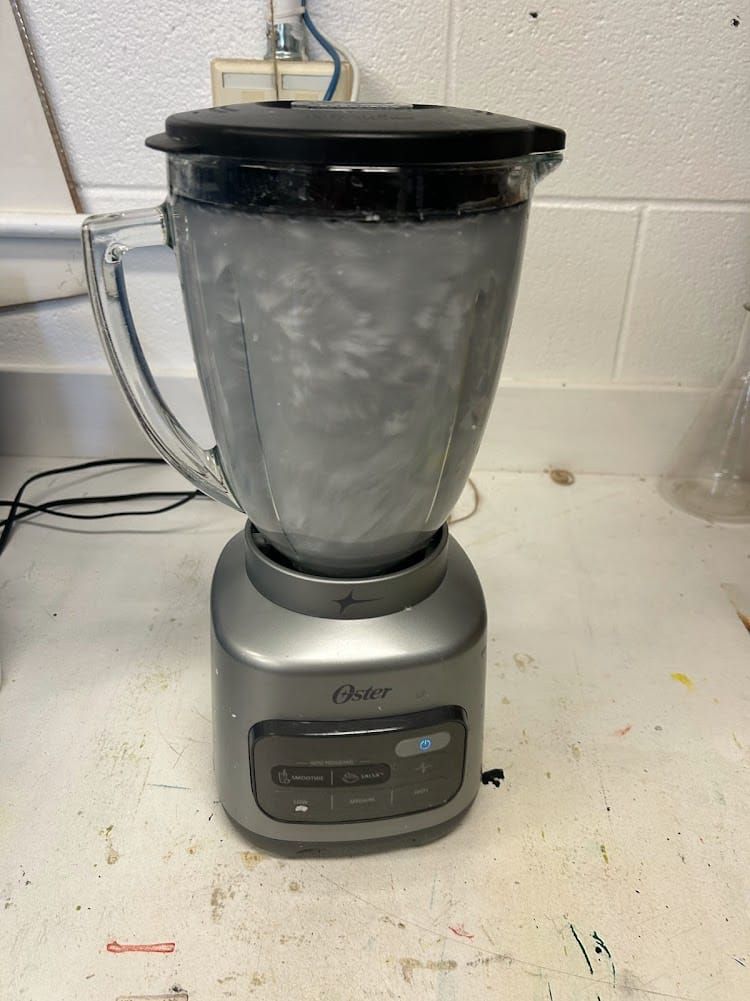
| Fibres cut short by too much blending | Long blender runs | Blend the next batch for less time, with more water and fewer scraps | Blend a small load in plenty of water until it is pulp, then stop |
| Too little pressure while pressing | The sheet was only sponged, or weighted lightly | Press one sheet harder between boards and compare | Press firmly, building up gradually |
Diagnose in order
Change one thing per batch. Make small test batches and label each sheet.
- Ask what went in the vat. Catherine Nash's beginner instructions rule out glossy stock and newspaper. Write down the source papers.
- Make a fibre test. Blend a small batch of cotton rag, drawing paper, or watercolor paper and pull a sheet the same way as before.
- Compare blend times. Make two small batches from the same paper, one with a short blend and one with a long blend.
- Compare pressing. Press one sheet firmly between boards and leave one lightly sponged. Dry them the same way.
Fixes, step by step
Use a better source
Your fibre choice sets the ceiling. May Babcock of Paperslurry recommends drawing, printmaking, and watercolor papers because they are made from stronger fibres, and warns that recycled paper in general tends to be weaker and more brittle. Mary Tasillo describes newspaper pulp as short, acidic wood fibre.
For a much stronger sheet, recycle 100% cotton rag paper or good handmade scraps, or use cotton linters.
Add a measure of long fibre
Recycled fibre has already been dried at least once, and drying reduces how much fibres can swell and bond again, an effect research calls hornification. If you want to keep using recycled paper, blend in a stronger fibre. Abaca has long fibres compared with recycled paper, and Arnold Grummer's notes recommend adding a small amount to recycled pulp for strength. Start with a small measured share of the batch, note it, and adjust from there.
Blend in short bursts
A blender cuts fibres instead of beating or fibrillating them, as Tasillo notes. Paperslurry's method is a blender full of water with a good handful or two of soaked scraps, and no more, or you risk burning out the motor. Blend until it is pulp, then stop.
Better beating improves a sheet in ways a blender cannot. A Hollander beater fibrillates the fibres, which creates bonding surface and strengthens the sheet. Catherine Nash's article in Hand Papermaking explains the difference.
Press properly
Pressing brings the fibres into contact. Paperslurry notes that a sheet that is only sponge-pressed will be weaker in the long run, because the hydrogen bonds do not form under the same pressure as in a press. Its hand-pressing method starts gently with a sponge, then presses firmly with as much pressure as possible, then goes over the sheet with a rolling pin. Boards with a weight, or a press, go further.
Do not expect sizing to rescue a weak sheet. Timothy Barrett notes that surface sizing can improve folding endurance and abrasion resistance but tends to lower tear resistance.
Prevent it next batch
- Sort your scrap before it goes in the vat. Keep newspaper and glossy stock out, as Nash advises.
- Keep a jar of stronger fibre to add to a weak batch.
- Time your blender runs instead of blending by feel.
- Press the same way every time, and log what you did.
When it's not fixable
A sheet that has already dried weak cannot be strengthened by pressing or sizing it. Tear it up, re-pulp it, and add better fibre.
Some paper will not improve much. Recycled newspaper is a poor base no matter how well you handle it. If it keeps falling apart after you've tried a stronger mix, change the source paper rather than the process.
FAQ
Is a weak sheet a fibre problem or a forming problem?
Test it by changing the fibre on its own. Make a small batch from cotton rag or good drawing paper and treat it the same way as your weak batch. A stronger result points to fibre. If the new sheet is also weak, check how it was pressed and how long you blended it.
Does a longer blend make the paper stronger?
Not usually. A kitchen blender cuts fibres rather than beating and fibrillating them, so running it longer can leave you with shorter fibres and a smoother but weaker sheet. Paperslurry's guidance is a handful or two of scraps in a blender full of water, blended until it is pulp.
Why does recycled paper fall apart when cotton does not?
Recycled paper starts with fibres that have already been beaten, formed, and dried at least once. Drying reduces how much fibres can swell and bond, which research calls hornification. Newspaper starts with short, acidic wood fibres. Cotton rag papers are generally made from stronger fibres.
Can I re-pulp a sheet that dried weak?
Yes. Tear it up, soak it, and blend it again. It will not gain strength on its own, so add some stronger fibre, such as abaca or cotton, to the mix before you pull new sheets.
Related problems
Next stage: Why Is My Handmade Paper Thicker on One Side (Thin Spots and Holes)?
Sources and further reading
- Beater Finesse for the Artist, by Catherine Nash (Hand Papermaking)
- Selecting Source Fibers, by Mary Tasillo (Hand Papermaking Newsletter #97)
- Here's How to Make Handmade Paper from Recycled Materials, by May Babcock (Paperslurry)
- All About Abaca (Arnold Grummer's Paper Making)
- Couch It! Papermaking Tutorial for Embedding Materials, by Katharine DeLamater (Paperslurry)
- Sheet Formation and Uniformity, by Ted Snider (Hand Papermaking Newsletter #53)
- Getting Started: The Simplest Way to Make Your First Sheet of Handmade Paper, by Catherine Nash
- Relationship between wettability of pulp fibers and tensile strength of paper during recycling (Scientific Reports, 2022)
- Sizing Terminology and Practice, by Timothy Barrett (Hand Papermaking, Winter 2015)