Why Does Ink Bleed on My Handmade Paper? (Sizing Explained)
Quick answer
Your sheet is probably unsized. Put one drop of water on it and watch. If the drop soaks in almost at once, the paper is waterleaf and will feather any watery ink. Brush a warm gelatin size over a test sheet, let it dry fully, and try the same pen again.
Is this your problem?
Symptom: Ink feathers or bleeds instead of staying in a line
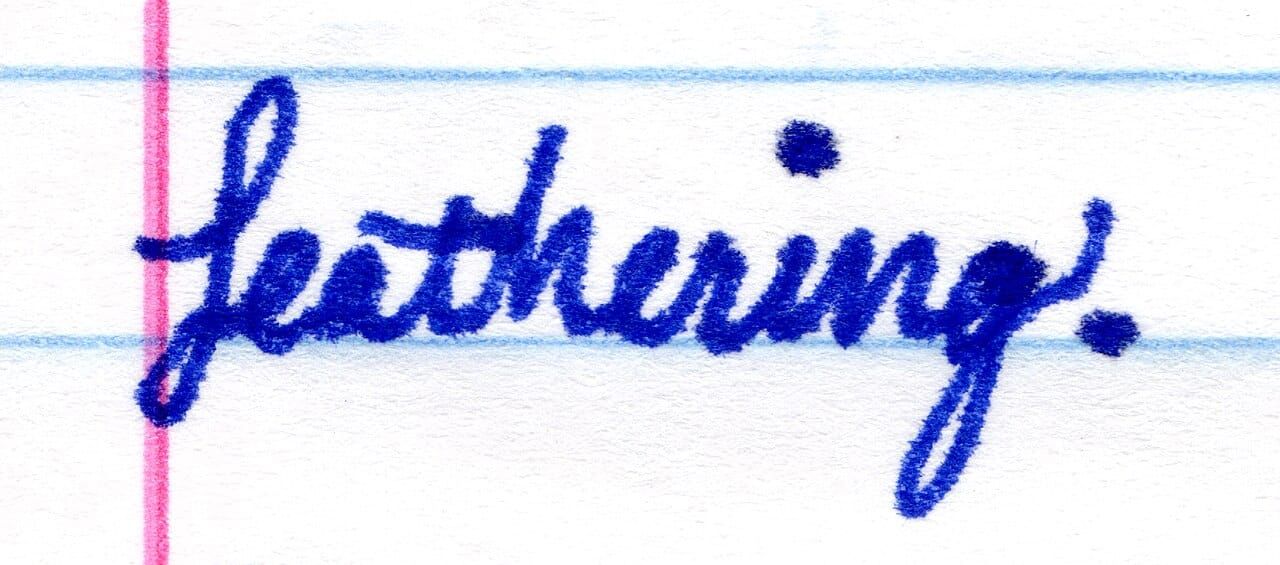
You touch a pen or brush to the sheet, and the line grows fuzzy whiskers. It spreads sideways, and from the back you may see it has come through. Printmakers and calligraphers call this feathering or bleeding.
Handmade paper does this by default. A sheet straight from the vat is waterleaf, which means it has no size to stop liquid moving through its fibres. Recycled pulp tends to be more absorbent still.
Rule out a look-alike first. If the line stays crisp but the nib catches and the surface sheds fuzz, you have a roughness problem. Sizing will not cure that, and it can waste a good sheet.

Similar symptoms
Ranked causes
| Cause | Tell-tale sign | Quick check | Fix |
|---|---|---|---|
| The sheet has no size (waterleaf) | Ink spreads the moment the nib touches the paper, in every part of the sheet | Put a drop of water on the sheet and time how fast it disappears | Apply a surface size, or add internal size to the next batch |
| The size is too weak or uneven | Some areas hold a line and others feather | Do the water drop test in several places on the sheet | Apply a second even coat, or use a stronger solution |
| The ink or the pen is very wet | The same ink also feathers on a well-sized commercial sheet | Write the same line on a well-sized commercial sheet | Try a different ink before you add more size |
| An open, rough surface | Lines are ragged and follow the texture, but the drop test is slow | Compare the rough face with the smoother face of the sheet | Work on the surface first, as the rough-paper guide describes |
Diagnose in order
Change one thing per test. Keep a labeled stack of test strips from the same batch.
- Do the drop test. With an eyedropper, set one drop of room-temperature water just above the surface. Time how long the drop takes to soak in, watching the sheen under a lamp at a low angle. Timothy Barrett describes this check. A lightly sized sheet absorbs the drop almost immediately. A heavily sized sheet holds it on top for a long time.
- Test several spots. Drop water near the edge, near the middle, and on both faces. Uneven times point to uneven size or uneven thickness.
- Test the ink. Write the same line in the same ink on a known, well-sized commercial sheet. If it feathers there too, the ink is the issue.
- Size one test sheet. Leave a sibling sheet unsized and write on both once the sized one is fully dry.
Fixes, step by step
Make a gelatin size
Surface sizing with gelatin has been in use since the 1200s, and it is still the simplest method for a small studio. Barrett suggests starting experiments with a 3.5% solution, which means 3.5 grams of unflavored gelatin in 100 milliliters of water. Lacour's notes give a tub-sizing range of 2 to 3%.
Lacour's notes put the gelatin in cold water for at least 10 minutes before heating. Barrett warms the solution in a double boiler until the gelatin dissolves and it is warm or very warm to the touch, about 50 degrees Celsius (122 degrees Fahrenheit), but not hot.
Apply it to a dry sheet
Surface size goes on a sheet that is already dry. Brush it on with a wide soft brush in even strokes, or slide the sheet through a shallow tray of warm size. Tub sizing was traditionally followed by light pressing to remove the excess.
Barrett separates tub-sized sheets promptly so they do not stick together, and hangs them to dry. Test one sheet before you commit a whole batch. A surface size can be brushed on locally too, so you can size only the part of a sheet you plan to write on.
Use internal size in the next batch
Internal sizes such as ketene dimer go into the pulp during the last minutes of beating, so every sheet in the batch gets the same treatment. Mary Tasillo notes that some of them can also act as a retention aid. Follow the supplier's dosage. Lacour's notes warn that one common internal size is hazardous in concentrated form and recommend safety glasses and skin protection when you mix it.
Avoid rosin-alum size. Barrett notes that it makes acidic paper that degrades over time.
Do both for wet media
Internal size followed by surface size can keep the surface size up on the sheet, where it does the most good. Use this for watercolor or heavy ink work.
Check the ink
Lacour's notes tie sizing to watery media: size reduces the absorbency that makes them bleed and feather, and a light size leaves more feathering than a strong one. If a sized sheet still feathers, write the same line on a well-sized commercial sheet. If it feathers there too, try a different ink before you add more size.
Prevent it next batch
- Decide before you pull whether the batch needs to take ink, and plan the size.
- Keep a small sheet from each sizing batch and do the drop test on it.
- Note the percentage of gelatin and the number of coats in your batch log.
- Warm stored gelatin gently before you reuse it. Keep it refrigerated between sessions.
- Start with a strong fibre. Barrett notes that surface sizing tends to lower tear resistance.
When it's not fixable
A sheet that has already been written on cannot be undone. A feathered line stays feathered.
Size can also make a sheet worse for some uses. Barrett notes that surface sizing tends to lower tear resistance, so a weak sheet can become more fragile. If the paper is falling apart, fix the fibre first.
FAQ
What is sizing?
Sizing is a treatment that makes paper resist water and other liquids so that ink stays near the surface. Gelatin and starch are traditional surface sizes. Hand papermakers also use internal sizes mixed into the pulp. Without any size, paper behaves like a blotter.
How is internal sizing different from external sizing?
Internal size goes into the pulp before the sheet is formed, so the whole sheet is treated. External, or surface, size is brushed, sprayed, or tub-applied to a sheet that has already dried. Timothy Barrett suggests that using both can help, because the internal size may keep the surface size from sinking in.
Why does ink bleed on waterleaf paper?
Waterleaf is paper with no size at all. Lacour's notes explain that cellulose is hydrophilic, so on an untreated sheet, inks and water-based dyes soak in and spread quickly and randomly. That spread is the feathering you see. Timothy Barrett describes artists using it on purpose, brushing size onto some areas so that a dye beads up there and bleeds into the unsized parts.
Will sizing fix a sheet that is only rough?
Size changes how the sheet takes up liquid. If the line skips or snags while the ink stays in place, you have a surface problem, and the guide to paper that is too rough to write on covers the fixes for that.
Related problems
Sources and further reading
- Sizing Terminology and Practice, by Timothy Barrett (Hand Papermaking, Winter 2015)
- Listening to Paper, by Timothy Barrett (Hand Papermaking, Winter 2017)
- Sizing (Lacour Art)
- Pulp Additives, by Mary Tasillo (Hand Papermaking Newsletter #92)
- A Brief Review of the History of Sizing and Resizing Practices, by Karen Garlick (Book and Paper Group Annual, 1986)
- Here's How to Make Handmade Paper from Recycled Materials, by May Babcock (Paperslurry)